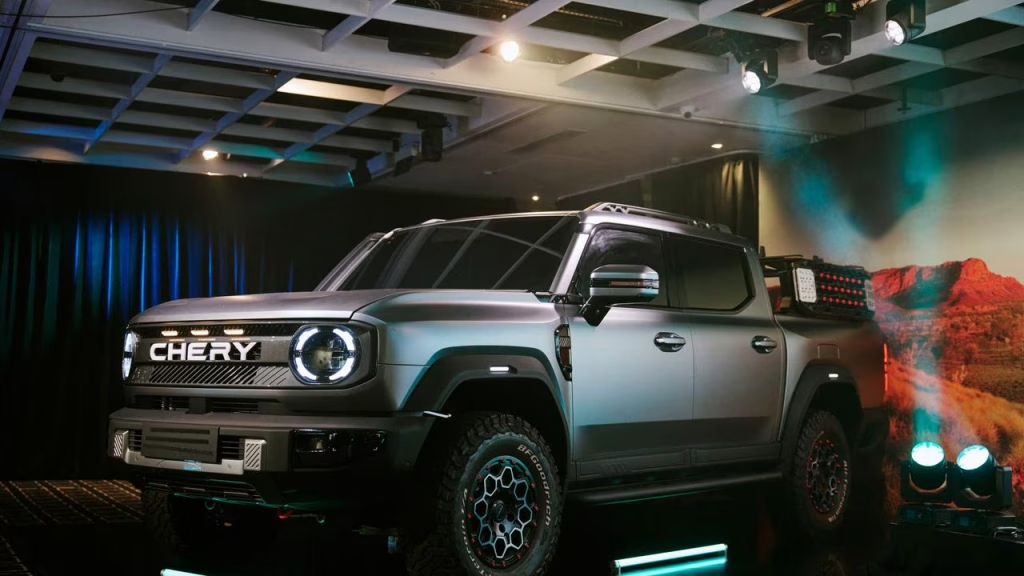
A diesel. A plug-in. Locking diffs. 1,300km range. Chery is lobbing a grenade into the double-cab segment, and the old guard should be worried.
Right. Gather round. There’s a new player coming to the South African bakkie wars, and it’s bringing something so blindingly obvious that you have to wonder why the usual suspects didn’t think of it first.
Chery. The Chinese juggernaut that’s been quietly stealing sales from under the noses of the established order, is about to lob a grenade into the double-cab segment. It’s called the KP31. It’s a diesel. It’s a plug-in hybrid. And it might just be the most sensible thing to happen to the working man’s chariot since someone invented the diff lock.
The usual rules of the bakkie game have been simple for decades: you want torque, you buy a diesel. You want to save fuel, you buy… well, a smaller diesel. But Chery, in a moment of what can only be described as mischievous genius, has decided to have its biltong and eat it. They’ve bolted an electric motor to a 2.5-litre turbodiesel, shoved it all into a proper ladder-frame chassis, and pointed it squarely at Pretoria.
What Exactly Is This Thing?
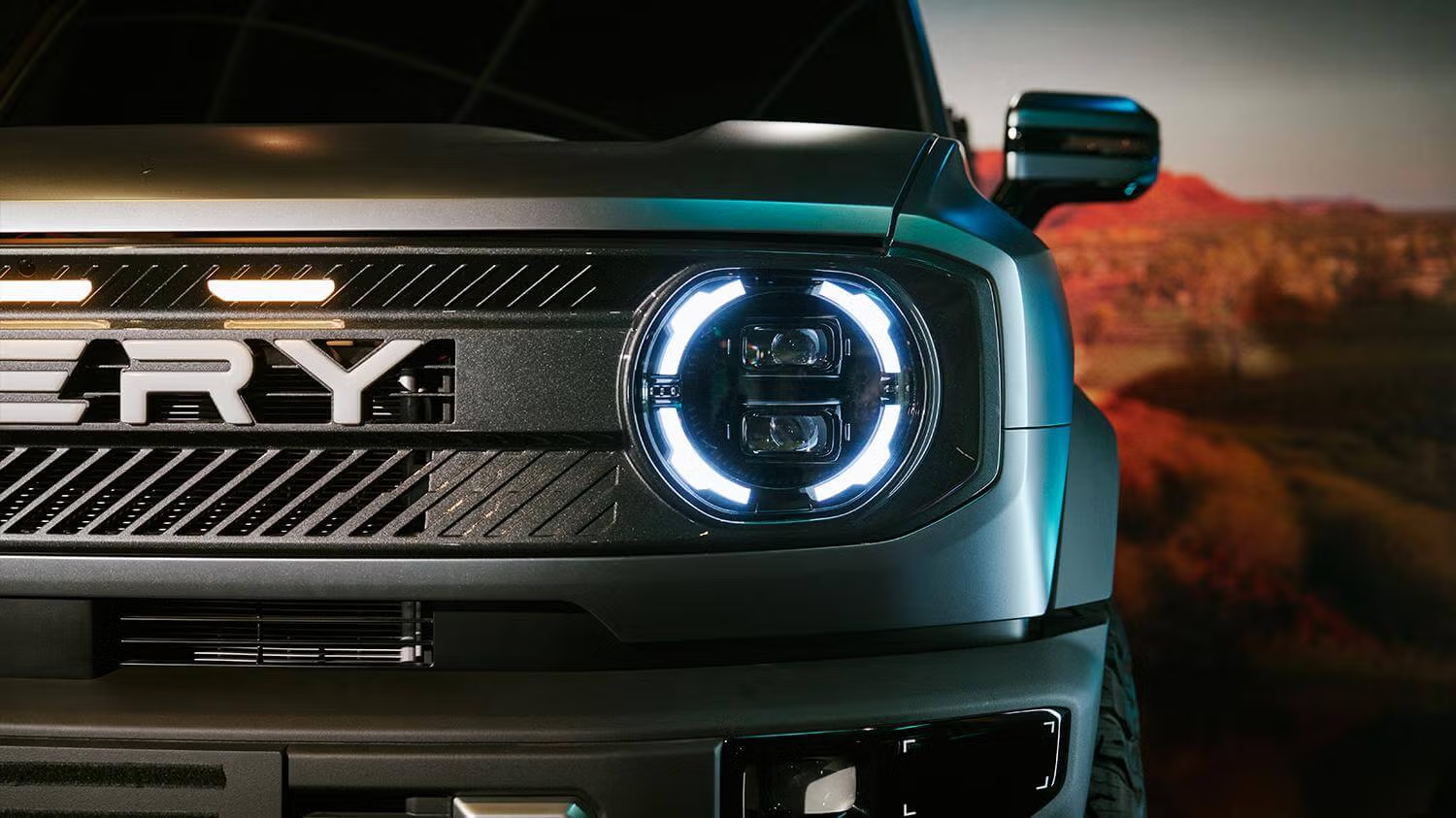
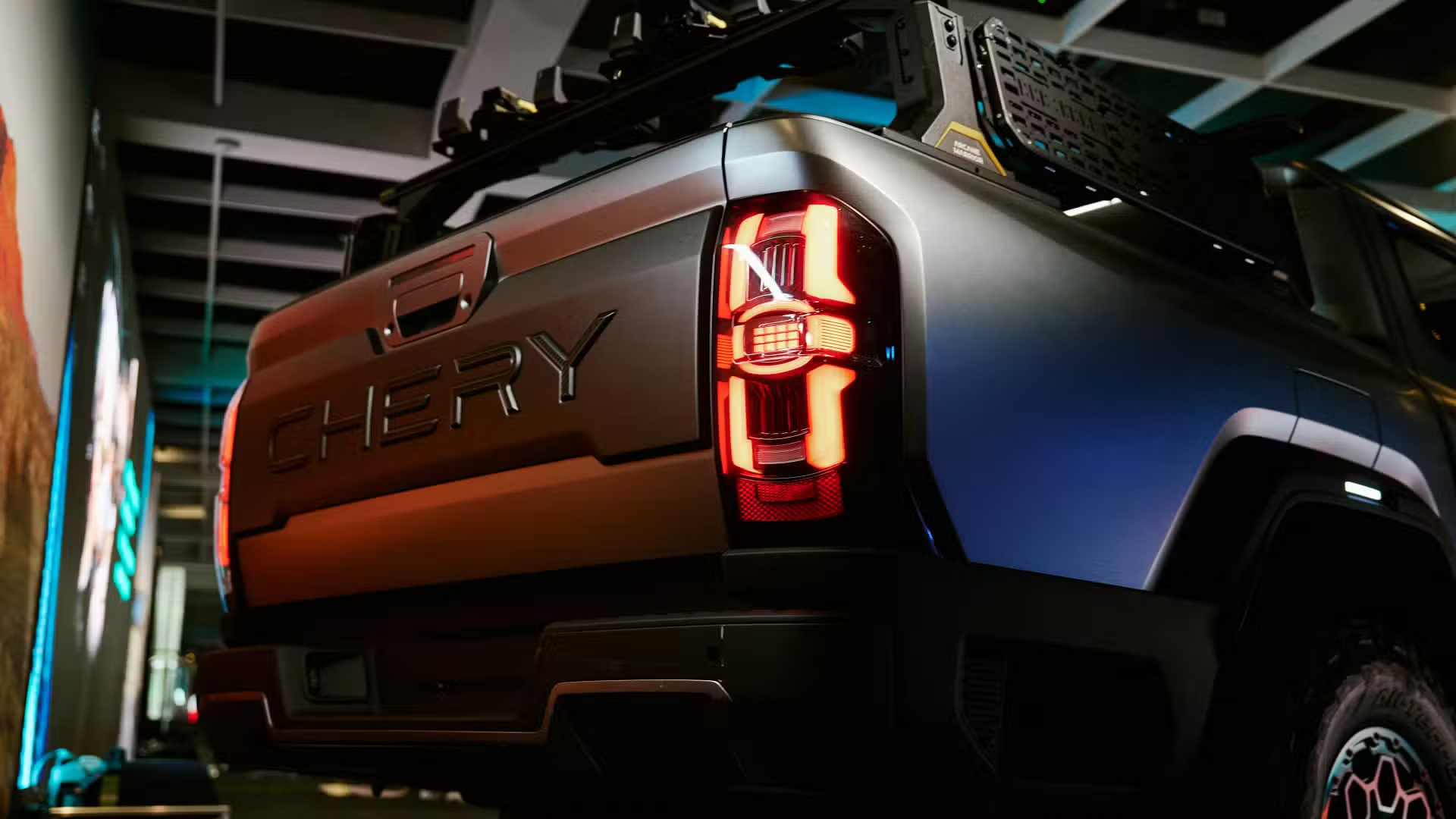
Codenamed KP31 (catchy, I know), this is not some fluffy, soft-road pretender. It’s a full-fat, body-on-frame double cab that’s been engineered from the ground up to take a beating. We’re talking about a vehicle that sits on a brand new Kaitan ladder-frame platform, designed to handle everything from a basic diesel to a full EV. It’s the automotive equivalent of a multi-tool; you can spec it to do absolutely anything.
Under the bonnet lives a 2.5-litre four-cylinder turbodiesel. But that’s only half the story. It’s mated to a plug-in hybrid system that Chery claims is a world-first for the segment. Now, before you petrol-heads start clutching your pearls about complexity, listen to the numbers. Chery is targeting a combined output of 260 kW and 680 Nm for the PHEV version. That’s not just “adequate for the school run.” That’s “pull a farmhouse out of a ditch” territory.
And because it’s a plug-in, you get an electric-only range of up to 170 km. For the average person living in Fourways, that means you could drive to work, do the grocery run, and pick up the kids from school without the diesel engine ever waking up. You’d be gliding around in smug, silent, oil-buying abstinence while the rest of us queue at the pump.
But Can It Do Bakkie Things?
This is the million-rand question, isn’t it? We’ve seen hybrid SUVs come and go, but a bakkie needs to earn its keep. It can’t just be a clean, green machine; it has to haul a ton of firewood without breaking a sweat.
Chery seems to understand this. They’ve given the KP31 the holy trinity of off-road hardware: front, centre, and rear locking differentials. It has a proper low-range transfer case. It has underbody protection, integrated recovery points, and a raised air intake for when you decide to test its 700mm wading depth.
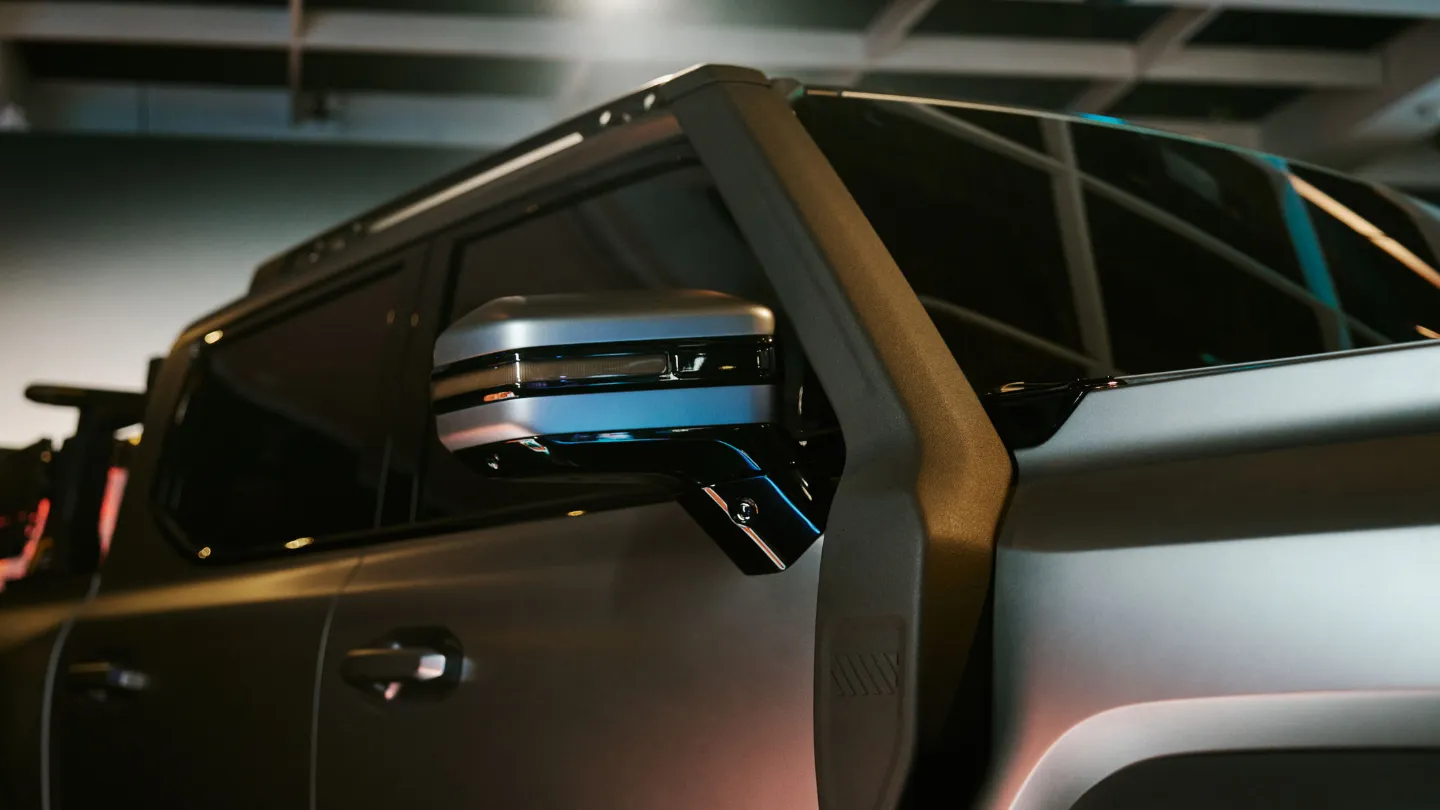
Snorkel, raised intake, and underbody protection – this one’s built for the rough stuff
The payload is a stout 1,000 kg, and the braked towing capacity is the full house 3,500 kg. On paper, it matches the Hilux and the Ranger inch for inch. In fact, it’s slightly longer than a Ford Ranger, measuring 5,450 mm in production form. It’s a big, angry-looking box with the specs to back up its attitude.
🔧 Key Specs: Chery KP31 PHEV
The Tech That Actually Matters
Inside, you can expect the usual Chinese assault of screens and leather. But the clever bit is the engineering. Chery claims the diesel engine in this thing achieves a thermal efficiency of 47%. To translate that from engineering jargon to English: it means the engine is extraordinarily good at turning diesel into forward motion rather than waste heat. It’s about 10% more efficient than the average diesel lump.
Combine that with the plug-in hybrid system, and the potential range figures become almost unbelievable. Early estimates, based on the related Rely P3X, suggest the KP31 could have a combined range of well over 1,300 km. That’s Johannesburg to Cape Town. On one tank. Without stopping. You’d run out of podcasts before you run out of fuel.
📅 The Launch Date (Circle It on Your Calendar)
Chery South Africa has confirmed that the KP31 will land in local showrooms in either the fourth quarter of 2026 or January 2027. It will initially launch with the headline-grabbing diesel PHEV, with a petrol PHEV version to follow. It’s also worth noting that Chery has a second bakkie, the Himla, which is expected to arrive earlier in 2026, potentially giving the brand a two-pronged attack on the market.
The DriveZA Verdict
Here’s the thing about the South African bakkie buyer. They are a loyal, skeptical bunch. They trust the Hilux because their grandfather trusted the Hilux, and his grandfather before him probably trusted the Hilux. It’s practically a religion.
But the Chery KP31 presents a compelling argument for heresy. It offers the capability of the old guard with the efficiency of the new. It promises to lug your caravan to the coast without drinking like a sailor on shore leave. It locks diffs and crawls over rocks just like the established kings, but it does so with a silent, electric whir for your daily commute.
Will it ruffle the feathers of the Big Three immediately? Probably not. Brand loyalty isn’t built in a day. But as a piece of engineering, as a statement of intent, the KP31 is a thunderclap. It’s Chery looking at the South African market and saying, “We understand what you need. And we’ve built it.”
If you’re in the market for a new bakkie in 2027, you’d be a fool not to take this one for a spin.
The established order has been put on notice. The Chinese have arrived, and they’ve brought a plug.