
Peugeot Landtrek review South Africa: R150k cheaper than Hilux
This Peugeot Landtrek review South Africa looks at why you should consider the overlooked French bakkie. R150k less than a Hilux, better interior, and massive fuel savings.
This Peugeot Landtrek review South Africa is for anyone tired of paying the Toyota tax. For years, the bakkie conversation has been dominated by three names: Toyota, Ford, and Isuzu. It’s become a default setting so ingrained that people buy Hiluxes without even test-driving anything else.
But here’s the thing about default settings. They’re rarely optimal. And while everyone else is fighting over waiting lists for Rangers and paying Fortuner money for decade-old Hilux designs, there’s a Frenchman standing in the corner offering you essentially the same thing for significantly less cash.
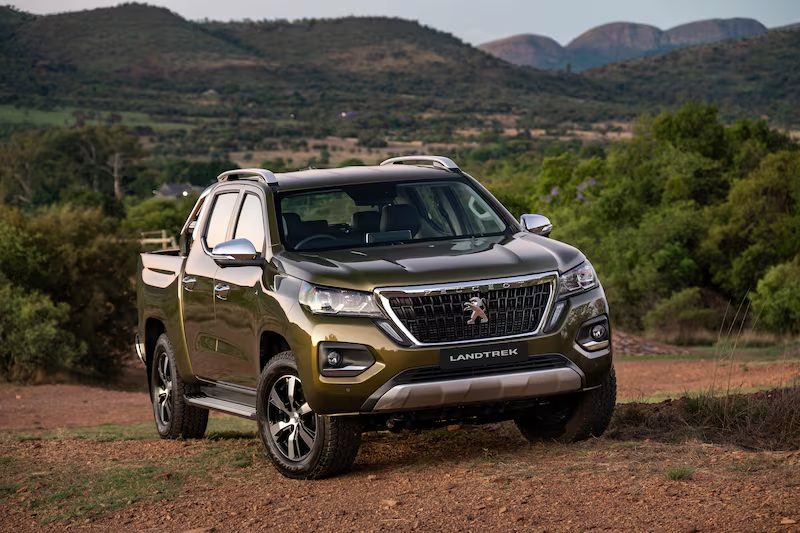
Meet the Peugeot Landtrek. It’s been around since late 2021. It’s been overlooked, underappreciated, and frankly, ignored by buyers who’d rather pay R200k more for a Toyota badge than actually test-drive the competition. That’s a mistake. And this Peugeot Landtrek review South Africa is here to fix it.
Wait, a French Bakkie? Is That a Joke?
French cars and reliability have historically had the same relationship as Eskom and load shedding – technically connected, but you wouldn’t bet your braai on it. But here’s the clever bit: the Landtrek isn’t really French. It shares its platform with the Changan Kaicene F70 – Chinese engineering that these days means “robust, sensible, and surprisingly well-built.” It’s a proper ladder-frame bakkie with a 1.9-litre turbodiesel engine producing 110 kW and 350 Nm.
The 1.9-litre unit comes from BMW’s engine partner and is actually more refined than you’d expect. Yes, it’s noisier than Ford’s 2.0 Bi-Turbo. Yes, it has more turbo lag than a teenager responding to their parents’ WhatsApp. But it’s also tough enough for the long haul and sipping fuel like a dieter at a wine tasting.
The Numbers That Actually Matter in This Peugeot Landtrek review South Africa
Let’s talk money, because that’s where the Landtrek stops being a “quirky alternative” and starts being a “genuinely intelligent decision.”
Pricing (as of March 2026):
- 2025 Peugeot Landtrek 1.9TD Single Cab Professional – R369,900
- 2026 Peugeot Landtrek 1.9TD Double Cab Allure – R469,900
- 4×4 models – From around R545,900
Compare that to a Hilux 2.4 GD-6 Raider (around R620,000) or a Ford Ranger 2.0 XLT (around R635,000). Savings of R150,000 to R200,000. That’s a second car. That’s a holiday. That’s 8,000 litres of diesel at current prices.
On the 4×4 Community Forum, one user reported that a 4×4 Landtrek was R120,000 cheaper than a 2WD Isuzu X-Rider. A four-wheel-drive French bakkie costs less than a two-wheel-drive Japanese one. The universe has stopped making sense.
The Fuel Economy Crown
If you’re after the most fuel-efficient double cab under R500,000, the Landtrek is your winner. The Professional model sips just 7.1 L/100km, giving a theoretical range of 1,127 kilometres between fill-ups – Johannesburg to Cape Town on one tank.
Even the 4×4 automatic models at 8.9 L/100km beat most rivals. At R1.37 per kilometre, you’ll be laughing while Hilux owners weep.
The Interior: Where Peugeot Actually Tries
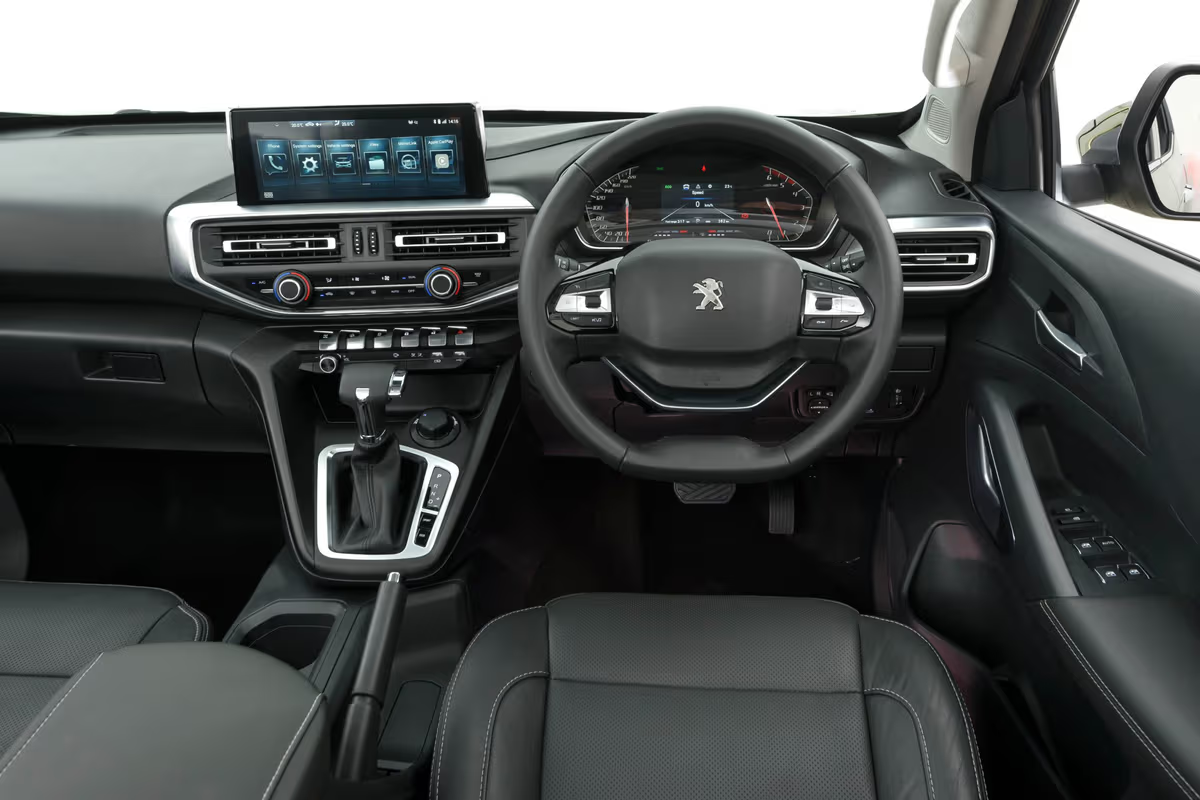
Peugeot makes some of the best car interiors, and they’ve brought that energy to the bakkie segment. The cabin is widely praised as the most SUV-like and premium-looking in its price bracket. A 10-inch touchscreen, i-Cockpit digital cluster, and soft-touch materials. The Allure model adds leather seats, lumbar support, automatic lights, rain-sensing wipers, and a 360-degree camera that’s actually useful.
One forum user who test-drove both the Landtrek and Isuzu X-Rider noted: “Cabin was also hard plastic but just looked way better and felt much more spacious with soft surfaces in the right places… at R200k more than a Landtrek, the Isuzu felt cheeky”.
The Practical Stuff: Loads, Towing, and Off-Road Cred
| Specification | Value |
|---|---|
| Payload (Single Cab) | 1,210 kg |
| Payload (Double Cab) | 1,000 kg |
| Towing Capacity (braked) | 3,000 kg |
| Ground Clearance | 235 mm |
| Dimensions (L/W) | 5,331 mm / 1,925 mm |
| Tyre Size | 265/60 R18 |
The 3,000 kg towing capacity is 500 kg less than the Ranger or Hilux, so if you’re dragging a Jurgens Safari around the country, you might need more grunt. But for 90% of buyers, it’s perfectly adequate.
Off-road, the Landtrek has proper 4×4 hardware including low-range, a rear diff lock, and Hill Descent Control (though some owners report HDC glitches). The 235 mm ground clearance is respectable.
✅ Landtrek Strengths
- Price: R150k-R200k cheaper than rivals
- Fuel economy: 7.1L/100km, 1,127km range
- Interior: Best cabin in the budget bakkie class
- Spec: 360 cam, i-Cockpit, leather available
- Ride: More SUV-like than workhorse
❌ Where It Falls Short
- Engine refinement: Noisy, laggy, down on power
- Dealer network: Fewer service points
- Parts availability: Historical Peugeot concerns
- Resale value: Lower than Hilux/Ranger
- Towing: 3,000 kg vs 3,500 kg rivals
- Electronics: Occasional HDC/TC glitches
Who Should Buy One? (A Peugeot Landtrek review South Africa buyer’s guide)
The Landtrek is for you if:
- You’re a lifestyle buyer wanting a comfortable, well-equipped bakkie for family trips and weekends
- You value fuel economy and range over straight-line speed
- You’re willing to save R150k+ upfront and accept slightly lower resale value
- You live near a Peugeot dealer or don’t mind traveling for services
- You appreciate a cabin that doesn’t feel like it was designed in 2005
Stick with the Hilux/Ranger if:
- You need a hardcore workhorse for heavy-duty farming or extreme overlanding
- You regularly tow near the 3.5-ton limit
- You live in a remote area with no Peugeot support
- Your ego requires the badge everyone recognises at the braai
More bakkie content from DriveZA
If you enjoyed this Peugeot Landtrek review South Africa, check out our Chery KP31 bakkie review and our Nissan 1400 kanniedood tribute. For a classic alternative, see our Toyota Cressida heritage story.
For official pricing and specs, visit the Peugeot South Africa website or check the Cars.co.za Landtrek review.
Underdog or Undervalued? Final verdict from this Peugeot Landtrek review South Africa
Here’s the thing about underdogs. Sometimes they’re underdogs because they’re genuinely worse. And sometimes they’re underdogs because buyers are sheep.
The Peugeot Landtrek is the second kind. It’s not perfect. It’s slower than a Ranger, less refined than a Hilux, and lacks the dealer network of an Isuzu. But it’s also R150,000 cheaper, significantly more fuel-efficient, and has a cabin that genuinely feels premium.
One forum user summed it up: “Overall, based on the drive the Peugeot felt like a better quality build and product, and definitely not like R200k was trimmed off build quality compared to the Isuzu”.
If you’re in the market for a double cab and you haven’t test-driven a Landtrek, you’re not being loyal. You’re being lazy. Go drive one. Compare it to the alternatives. Then ask yourself whether the badge is really worth R150,000.
The French have built a sensible, comfortable, economical bakkie that deserves more attention. It won’t replace the Hilux in sales charts overnight. But for the buyer willing to think differently, it’s an absolute steal.


