

October 2026 delivered 61,890 new vehicles — a 10.4% year-on-year jump, the 25th consecutive month of growth, and Suzuki’s best month ever. But almost a fifth of passenger car sales went to rental fleets.
October 2026 delivered 61,890 new vehicles — a 10.4% year-on-year jump, the 25th consecutive month of growth, and Suzuki’s best month ever. But look beneath the headline and a more complicated picture emerges: almost a fifth of passenger car sales went to rental fleets.
This is the first edition of what will become a monthly fixture on DriveZA: a plain-language breakdown of what South Africa actually bought, who sold it, and what it means for the person in the showroom.
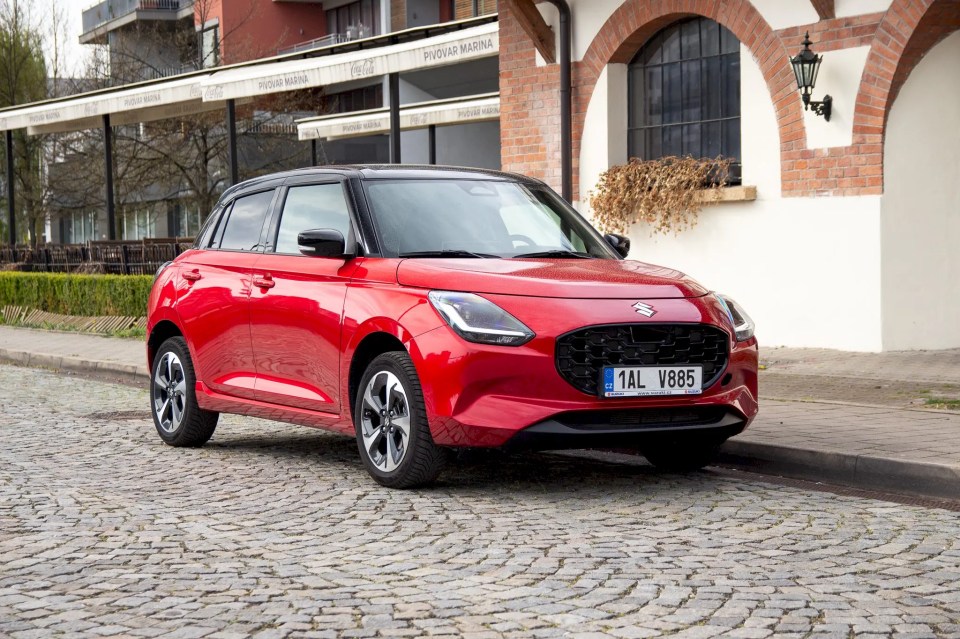
Suzuki’s record-breaking October: the Swift remains the brand’s volume driver in South Africa.
The Headline Number
| Metric | October 2026 | October 2025 | Change |
|---|---|---|---|
| Aggregate new vehicle sales | 61,890 | 56,051 | +10.4% |
| Passenger cars | 45,084 | 39,704 | +13.6% |
| Light commercial vehicles | 13,689 | 13,398 | +2.2% |
| Medium commercial vehicles | 770 | 777 | -0.9% |
| Heavy trucks and buses | 2,347 | 2,172 | +8.1% |
| Vehicle exports | 38,117 | 35,853 | +6.3% |
Two things stand out. First, this was the second month of 2026 above 60,000 units, and 0.4% higher than September — making October the strongest month of the year so far. Second, exports grew for the first time since January 2026, up 21.1% month-on-month. That matters because South Africa’s vehicle manufacturing sector has been bleeding export volume all year: cumulative exports for January to October remain 8.3% below the same period in 2025.
So the domestic market is carrying the industry right now. Which raises the obvious question: who’s actually buying?
Who’s Buying? The Channel Split
| Sales Channel | Share of October 2026 Sales |
|---|---|
| Dealer sales | 78.0% |
| Rental industry | 16.5% |
| Government | 3.3% |
| Corporate fleets | 2.2% |
Here’s the number that should make you pause: the rental industry accounted for 21.4% of all new passenger car sales in October. More than one in five new cars registered last month went straight into a rental fleet.
NADA chairperson Brandon Cohen was careful about this, noting that October’s figures “held their September level” but that performance differed across categories and that rental companies accounted for a larger share of purchases. His conclusion was pointed: “A stronger overall sales figure does not mean that pressure on household budgets has eased.”
In plain terms: private buyers are still cautious. Fleets are doing a lot of the heavy lifting. If you’re wondering why the market looks healthy while your neighbours aren’t buying new cars, that’s why.
The Brand League Table
| Rank | Brand | October 2026 | Month-on-Month | Notable |
|---|---|---|---|---|
| 1 | Toyota | 14,495 | -5.7% | 23.4% market share |
| 2 | Suzuki | 7,292 | +9.4% | All-time record |
| 3 | Volkswagen Group | 6,515 | +9.2% | Best since Oct 2023 |
| 4 | Ford | 3,353 | +5.1% | Highest in 5+ years |
| 5 | Hyundai | 3,207 | +4.9% | Second-best of 2026 |
| 6 | GWM | 2,919 | +8.1% | Likely best ever |
| 7 | Chery | 2,754 | -8.3% | Still seventh |
| 8 | Kia | 2,233 | +21.4% | Best since Oct 2021 |
| 9 | Isuzu | 2,123 | -29.7% | Sharp fall |
| 10 | Jetour | 2,102 | +3.2% | Holding top 10 |
Just outside the top 10: Renault (1,706), Mahindra (1,484), BMW Group including Mini (1,312), Omoda & Jaecoo (1,201), and Tata (1,057).
Three stories in that table
Suzuki’s record is the headline. Crossing 7,000 units for the first time is a genuine milestone — but note that 2,232 of those were rental sales. Suzuki’s private buyer demand is strong; its fleet volume is now material too.
Toyota is still untouchable. A 23.4% share means roughly one in four new vehicles sold in South Africa last month was a Toyota, Lexus or Hino. The 5.7% month-on-month dip is noise against that kind of dominance.
Isuzu’s 29.7% collapse is the anomaly to watch. Falling from fourth to ninth in a single month is a big swing. It could be a shipment timing issue, a rental order that didn’t repeat, or a genuine softening. Next month’s figure will tell us which.
The New Energy Vehicle Story Keeps Getting Stronger
The NEV numbers are no longer a curiosity. They’re a trend.
- 22,389 NEVs sold in the first nine months of 2026 — already 34% higher than the entire 2025 total of 16,703, with a full quarter still to go.
- One in every nine cars sold in September 2026 was an NEV.
- Rechargeable vehicles (PHEVs and BEVs combined) crossed 50.5% of year-to-date NEV sales in September, overtaking traditional hybrids for the first time on a cumulative basis.
- The split: 8,082 PHEVs, 3,217 BEVs, and 11,090 traditional hybrids year-to-date.
That shift matters because it shows South African buyers aren’t just dipping a toe into mild hybrids. They’re moving toward plug-in and fully electric vehicles — the more committed end of the electrification spectrum. Naamsa noted that green mobility is also beginning to appear in light and medium commercial vehicle segments, though volumes there remain tiny.
The context makes this more impressive: inland 95-octane petrol breached R30 per litre for the first time in October. High fuel prices are doing what years of marketing couldn’t — pushing buyers toward electrified options.
The Fuel Price Wildcard
October’s fuel shock is now part of the sales story. Inland 95 petrol crossed R30/litre following higher international oil prices and supply disruptions.
There is relief coming. The R10-billion temporary fuel levy relief package announced in the October 21 MTBPS takes effect from 4 November, cutting the diesel levy by R3/litre and the petrol levy by R1.50/litre.
But let’s keep it honest: based on October price levels, petrol would still be about 39% above January 2026 levels, and diesel wholesale prices about 60% higher. The relief softens the blow. It doesn’t undo it.
For the monthly sales story, this means affordability remains the single biggest constraint on private demand. Naamsa’s own outlook statement acknowledges as much: sustaining momentum depends on “strengthening domestic purchasing power” and addressing “structural cost pressures affecting both manufacturers and consumers.”
The Year-to-Date Picture
| Metric | End October 2026 |
|---|---|
| Total vehicles sold year-to-date | 554,081 |
| Target to reach 600,000 for the year | 45,919 across November and December |
| Exports year-to-date vs 2025 | -8.3% |
| NEV sales (Jan–Sep) | 22,389 (+34% vs full-year 2025) |
NADA’s Cohen believes the market is “well placed to exceed 600,000 sales this year,” but adds the caveat that the final total “will depend on buying activity over the remaining two months.”
Forty-six thousand units across two months is achievable — October alone did 61,890. But November and December are historically unpredictable, and household budgets remain stretched.
What to Watch in November
- Does Suzuki hold above 7,000? A record month is one thing. Sustaining it is another — especially if the rental volume doesn’t repeat.
- Does Isuzu bounce back? A 29.7% drop demands an explanation. Watch whether it returns to the top five or settles lower.
- Does the fuel levy relief move private buyers? November is the first full month with the reduced levy. If private demand doesn’t respond, that tells us the problem is borrowing costs and confidence, not just petrol prices.
- Does the NEV share keep climbing? One in nine in September. If that becomes one in eight or better, the tipping point is closer than the industry expected.
- Do exports keep recovering? One positive month doesn’t reverse an 8.3% year-to-date decline. Two in a row would be a genuine trend.
Every month we’ll publish the same structure so you know exactly what to expect:
The headline number — aggregate sales, YoY and MoM change, consecutive growth streak
Who’s buying — dealer vs rental vs government vs fleet split
The brand league table — top 10 brands with MoM movement and standout notes
The NEV story — year-to-date NEV sales and the PHEV/BEV/hybrid split
The year-to-date picture — running total and the 600k milestone tracker
What to watch next month — five specific things to monitor
Note: Naamsa’s public release does not include model-level top 10 sales. Those figures come from manufacturer press releases and are published separately a few days after the Naamsa release. When we have that data, we’ll add a model-level table.
The Bottom Line
October 2026 was a good month for the South African new vehicle market — the best of the year, in fact. Twenty-five consecutive months of growth is a genuinely impressive run, and Suzuki’s record deserves the applause it’s getting.
But the growth is being part-funded by rental fleets, private buyers are still under pressure, and the fuel price remains the single biggest threat to the recovery. Naamsa’s own language — “resilience against persistent economic pressures” — is a polite way of saying the market is holding up, not surging.
The next two months will decide whether 2026 ends above 600,000 units. Based on October’s momentum, it’s more likely than not. But don’t mistake fleet volume for consumer confidence.
#DriveZA #NewCarSales #October2026 #Naamsa #SouthAfrica #CarMarket
More from DriveZA
If you’re following the market, read our July 2026 sales analysis and our classic car investment guide. For what to expect from the new model launches, see our Mazda CX-5 preview.
For official market data, visit naamsa.


